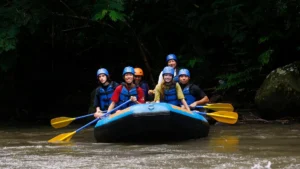
If you are asking whether river rafting in Bali feels safe for first-timers, or whether white water rafting sounds too dangerous, that reaction is normal. Most first-timers are not asking whether it looks fun. They are asking whether it feels too intense, whether falling out is a real concern, and whether the activity still feels manageable if they are cautious or cannot swim well.
This page is for that early stage.
It helps first-timers understand what rafting usually feels like, what the real risks are, what affects how safe it feels, and when someone should pause and think more carefully before trying it.
It does not compare rivers in detail, explain age limits, list operators, or cover prices and booking.
For many first-time rafters, rafting feels more like a guided outdoor activity than an extreme sport. Guided support, safety briefings, and manageable conditions can make it feel less intimidating than many cautious travelers first expect.
Table of Contents[Hide][Show]
Why Rafting Can Feel Scary at First
What makes rafting feel scary is usually a mix of fast-moving water, sudden splashes, shouted paddle commands, and the feeling of not being fully in control at first.
For many beginners, that first reaction comes from unfamiliarity, not from the activity automatically being too dangerous.
That is why the first part of the experience matters so much.
Once the raft starts moving and the group begins following a rhythm, many first-timers settle down faster than they expected. The fear often comes first. The rhythm usually comes after.
Many first-timers feel most nervous before the experience finds its flow. Once it is underway, the activity often feels more manageable than they first expected.
What the Experience Usually Feels Like
For many travelers, rafting feels more like a guided outdoor activity than an extreme test. It usually begins with a short safety briefing, simple instructions, and time to understand how the activity works.
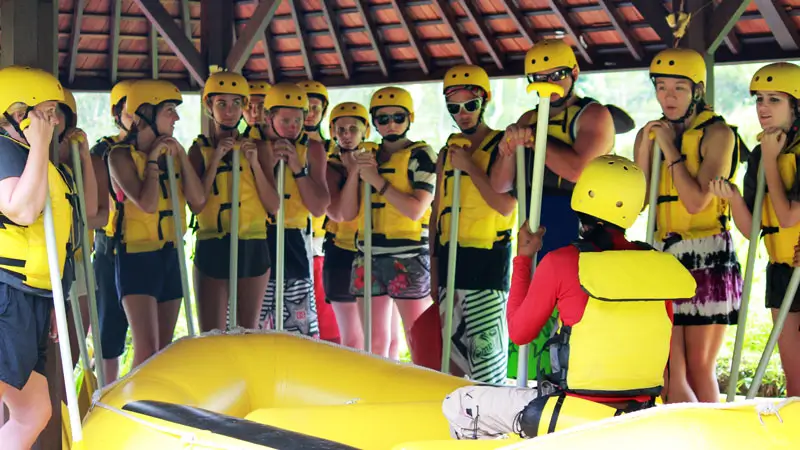
On the river, the experience is often a mix of calmer stretches, short bursts of movement, splashes, and a few moments that raise your adrenaline.
That is very different from nonstop, high-pressure action.
For cautious adults and first-timers, the step-by-step guidance often makes the experience feel more manageable.
You do not need previous white water rafting experience for many beginner-oriented trips. What matters more is being willing to listen, stay alert, and follow instructions once the activity begins.
It also helps to remember that nobody expects you to arrive already knowing what to do. Feeling nervous is normal. Listening well, staying engaged, and adjusting to the rhythm of the activity is often what helps that nervousness fade.
What Could Actually Go Wrong?
It is better to ask what can realistically happen than to ask whether rafting is completely safe. That also applies when people ask how dangerous white water rafting really is.
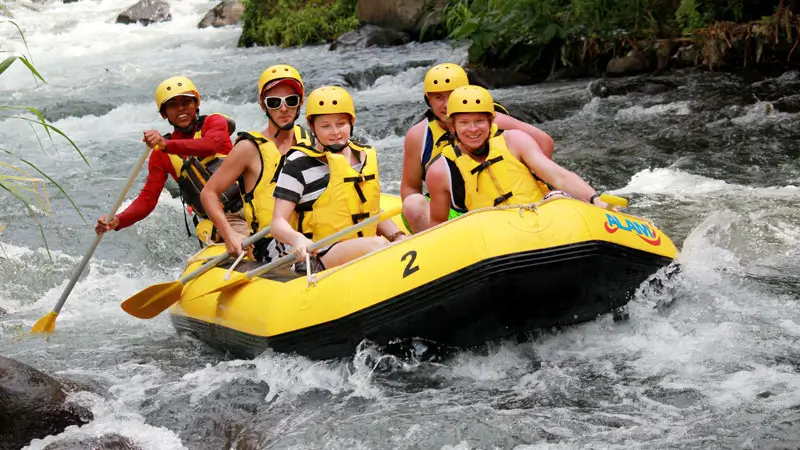
Like any outdoor activity, rafting has real but often manageable risks. Minor bumps, slipping on access paths, fatigue, or, less often, falling out of the raft are the more realistic concerns.
That does not mean serious problems are common. It means rafting should be discussed honestly. Safety preparation and supervision matter because unexpected moments can happen, even in experiences that many beginners can handle.
Before the activity begins, basic safety preparation matters because first-timers need to understand how the team handles the experience. It does not remove all risk, but it can make the activity feel clearer and less unfamiliar.
For people who cannot swim, the main concern is not whether they can swim well. The more important question is whether they can stay calm, follow directions, and respond steadily when faced with something new.
Some cautious travelers may still feel comfortable trying it, but they should not take it lightly.
Is River Rafting in Bali Safe for Some First-Timers?
For many first-timers, rafting can feel safe enough when the conditions are suitable, and the activity matches the participant’s comfort and readiness.
That does not mean every situation feels the same, every day is equally calm, or every person should try it without thinking carefully.
A better way to look at it is this: rafting can be manageable for many beginners, but that feeling depends on several things at the same time:
- How forceful the water feels that day
- weather and upstream rain
- how clearly the activity is explained and supervised
- whether the participant feels physically and mentally ready
- the participant’s comfort, mobility, and overall confidence
That is why the safest answer is never a blanket yes for everyone. For nervous beginners, calmer and more manageable conditions usually feel easier than conditions that feel faster or more intense.
Who Should Double-Check Before Trying It?
Very Nervous First-Timers
Being nervous does not automatically mean rafting is a bad idea.
But if someone is highly anxious around moving water, worried about loss of control, or likely to panic when splashed or when shouted instructions start, it is better to pause and think carefully rather than assume the experience will automatically feel manageable.
Younger Children
Children should not be judged by confidence alone. If the main concern is age limits or whether a child is realistically ready, that usually requires a more specific discussion than this page is designed to provide. Read our guide to the minimum age for rafting with kids.
Older Adults or Travelers With Lower Mobility
For some travelers, the main concern is not only the water itself. Mobility, balance, and overall physical ease can affect how manageable the experience feels.
Someone with balance issues, knee trouble, low stamina, or recent recovery from injury should think more carefully before taking part.
Rainy-Season Conditions
Rain does not automatically mean rafting should be avoided, but it can make conditions less predictable. Upstream rainfall can change how the water feels, even when the starting point seems manageable.
For cautious first-timers, that matters because the same activity can feel different depending on overall conditions on the day.
For weather-related risk checks, use the official Bali weather alerts from BMKG. The page may open in Indonesian, but it is the official local source for weather warnings.
Important Note
This page is general guidance, not a safety guarantee, medical opinion, or legal advice.
Rafting involves real outdoor risk and may not suit every traveler or every group. Suitability and conditions should always be considered carefully.
Quick Answers for First-Timers
Is River Rafting Safe in Bali?
It can be for many travelers when conditions are suitable, and the activity matches the participant’s comfort and readiness. It should still not be treated as risk-free.
How Dangerous Is White Water Rafting?
“White water” can sound more intense than many first-timers expect. In practice, the real question is whether the conditions, supervision, and the participant’s readiness make the activity feel manageable.
What if I cannot swim?
Many travelers go white water rafting even if they are not strong swimmers. However, it is still important to stay calm, follow instructions, and respond steadily, especially if the experience feels new to you.
Can I Fall Out of the Raft?
Yes, it is possible. It is not the outcome most people experience, but it is one of the reasons safety preparation and supervision matter.
How Do I Know If I Should Pause and Think More Carefully?
Think more carefully if the participant is very nervous, has lower mobility, is recovering from injury, or feels especially uneasy about unpredictable conditions.
Final Take
For many first-timers, white water rafting feels scarier before the experience starts than it does once the raft is moving.
That does not mean it suits everyone, and it does not justify blanket promises.
It means many cautious travelers can understand it more clearly when they look at the activity through the right lens: not as something automatically dangerous, but not as something risk-free either.
 Minimum Age for Rafting With Kids: Can 3 Join?
We'd love to hear from you! Share your thoughts or experiences in the comments below!