This page is for travelers comparing rafting Ubud options and deciding whether Ayung River rafting fits their trip before they choose an operator.
It focuses on the practical questions that matter most: who Ayung suits, how the river feels, when it works well in a Bali schedule, what to compare between operators, and when another rafting option may fit better.
“Prefer reading in Indonesian? Read Ayung Rafting Ubud: Panduan, Akses, Alur Hari-H.”
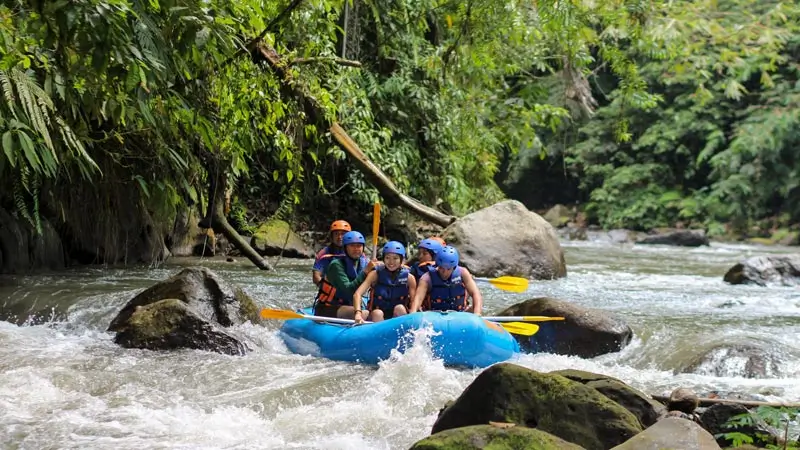
Among Ubud rafting choices, Ayung is usually the easier option to compare positively when you want scenery, comfort, and an active experience that does not rely on strong rapids.
For many travelers, that is what keeps Ayung on the shortlist.
Table of Contents[Hide][Show]
Who Ayung River Rafting Usually Fits Best
Ayung usually fits travelers who want rafting in Ubud to feel approachable, scenic, and manageable.
It is not the river that most people choose for the hardest ride. It is more often chosen by people who want an activity that still works for the group they are traveling with.
Beginners and First-Time Rafters
Ayung often works well for first-time rafters because it is usually seen as the more approachable option.
Rapids are commonly described as class II to III, which helps explain why many first-timer comparisons lean toward Ayung.
If confidence matters more to you than stronger rapids, Ayung is often the easier river to choose.
If you like the idea of Ayung but still feel unsure, read our guide on whether white water rafting in Bali feels scary for first-timers.
Families and Mixed-Comfort Groups
Ayung also compares well for families and groups where not everyone wants the same level of challenge.
When one person wants scenery, another wants movement, and another wants something manageable, Ayung is often easier for the group to agree on.

That makes it one of the more practical water rafting Ubud choices for mixed groups.
Couples, Solo Travelers, and Easygoing Travelers
Ayung often suits couples, solo travelers, and visitors who prefer a calmer outdoor rhythm.
If you want an activity that feels active but not overly demanding, Ayung usually compares well. It is often the better fit for travelers who prefer a lighter adventure profile.
How Ayung Usually Feels on the River
Ayung does not usually stand out because it is the most intense river. It tends to stand out because the route feels scenic, enclosed by nature, and easy to enjoy without needing a stronger thrill bias.
That overall feel is often the main reason people choose it.
Scenic Features on the Ayung River

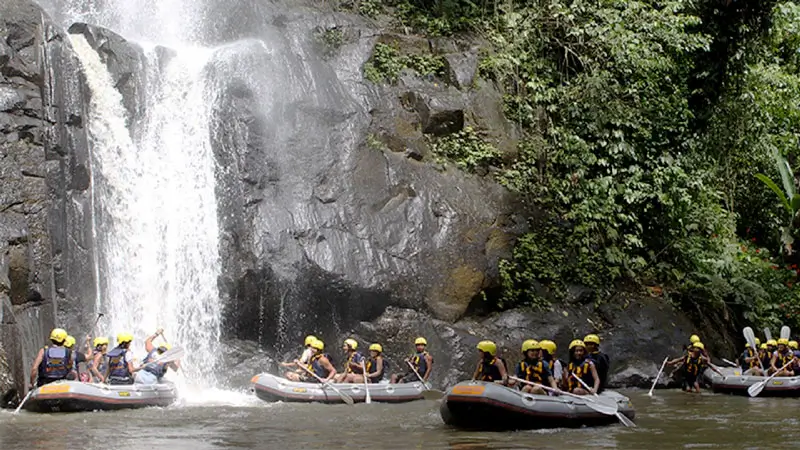
Ayung is often chosen for greenery, cliffs, small waterfalls, and Ramayana-style carvings along the route.
These are not just background details. They shape the experience and make the river feel visually rewarding from start to finish.
Softer Overall River Character
The river is usually compared as more scenic than intense. That does not mean it feels passive, because there is still enough movement and splash to keep people engaged.
The difference is that the overall impression comes more from flow and atmosphere than from a heavier adrenaline profile.
When Ayung Makes More Sense in a Bali Plan
Ayung usually compares strongly when time, transfer distance, and daily energy matter as much as the activity itself. It is often easier to place into a Bali day plan than an option that feels longer or heavier.
This is one of the main reasons travelers keep it on the shortlist.
Staying in or Near Ubud
If you are staying in Ubud or nearby, Ayung is often one of the more practical rafting Ubud choices.
The rafting area is around Kedewatan in northern Ubud, about 10 to 15 minutes from central Ubud.
That shorter transfer makes the activity easier to include without letting it take over the day.
Choosing Ayung for a Half-Day Ubud Plan
Ayung usually works well for travelers who want an outdoor activity without giving up a full day. This matters in many Ubud rafting comparisons because the activity is competing with other plans, not just with other rivers.
Ayung often stays attractive because it fits more easily into a balanced schedule.
Coming From South Bali
Ayung can still work for travelers staying in Kuta, Seminyak, or Sanur, although the transfer is longer.
In general, it is around 60 to 90 minutes from those areas, depending on traffic.
That does not make it the closest option, but it can still be practical if Ubud access works for that day.
What to Compare Before Choosing an Ayung Operator
Once you already know Ayung suits your trip, the next comparison is no longer about the river itself.
The decision shifts to which Ayung operator fits your group better in practical terms.
The most useful comparison points are comfort, logistics, and how smooth the day looks from arrival to finish.
Access Comfort
Access comfort is one of the most important operator-level comparison points.
Some operators may involve a downhill path and many stairs from the basecamp to the river.
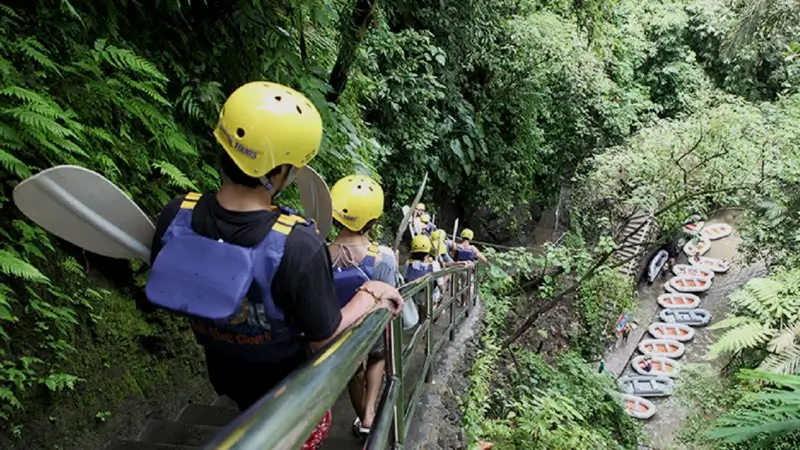
If your group includes older travelers, children, or anyone sensitive to stairs, this should move much higher in your comparison than many first-time bookers expect.
Pickup Practicality
Pickup should be treated as a convenience factor, not as a reason to choose an operator on its own.
When comparing operators, the more useful question is whether transport support makes the day feel easier for your group, especially if you are staying outside Ubud.
This helps you judge overall practicality without turning the page into an operator services guide.
Basecamp Usefulness
Basecamp quality often affects whether the day feels smooth or inconvenient.
Look at changing rooms, showers, and storage if those details matter for your group.
These are practical points, but they often shape the overall experience more than a broad marketing promise.
Family Fit
Not every operator feels equally convenient for families, even when they all run on the same river.
If you are bringing children, compare family fit in terms of access comfort, overall setup, and how manageable the day looks from start to finish.
That usually tells you more than generic claims.
Ayung Operator References
Compare these Ayung operator pages one by one:
- See Sobek Ayung’s details.
- See Graha Adventure Ayung details.
- See Mason Ayung’s details.
- See Payung Ayung details.
If you are comparing Ayung for a family group, check the child’s age and safety guide before narrowing down your operator choice.
When Ayung River Rafting May Be the Weaker Fit
Ayung is not the strongest comparison choice for every traveler. It can be the weaker fit if your main goal is stronger rapids, a more aggressive river feel, or a day that feels more physically demanding from the start.
In those situations, Ayung may simply feel too gentle.
Moreover, if Ayung feels too gentle for what you want, compare Ayung and Telaga Waja side by side before you rule the river out completely.
If Intensity Is the Main Priority
If you begin by asking which river feels harder, Ayung may not be the strongest match.
Its main advantage is usually the balance between scenery and activity, not a higher-intensity profile.
Travelers who want the river itself to feel more forceful may prefer another option.
If intensity is your main filter, see how Bali river grades compare before deciding that Ayung is too mild for you.
If You Want a Sharper Adventure Feel
Ayung can also feel too soft for travelers who want the activity to become the clear high point of the day.
It is usually better for scenic and easygoing preferences than for people who want a sharper adventure feel from start to finish.
That difference should be clear before you decide Ayung is the right river for you.