
Welcome to our concise holiday guide about Lempuyang Temple, the Gate of Heaven, in Bali. As a top destination in Southeast Asia, Bali boasts beautiful beaches, a unique culture, excellent tourism facilities, and warm hospitality. On this beautiful island, you’ll find many sacred sites, and this Bali temple guide can help you compare Lempuyang with other important temples.
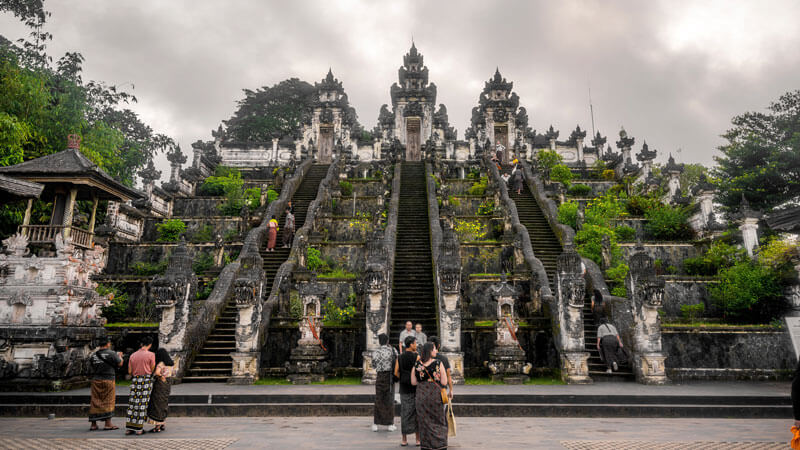
Penataran Agung Lempuyang is an important Hindu temple in Bali, known for its rich cultural experiences, excellent photo opportunities, and beautiful natural scenery. It’s highly recommended for photography enthusiasts. Furthermore, this Bali trip guide provides vital details for planning your visit, including the temple’s history, unique features, purpose, step count, admission fees, photo spots, and the best time to visit.
Table of Contents[Hide][Show]
- What Is Lempuyang Temple and Why Do Visitors Come Here?
- Lempuyang Temple History and Spiritual Importance
- Lempuyang Temple Complex: The Seven Sacred Temples
- How to Get to Lempuyang Temple
- Best Time to Visit Lempuyang Temple for Photos, Weather, and Fewer Crowds
- Lempuyang Temple Dress Code and Etiquette
- FAQ About Visiting Lempuyang Temple
- Lempuyang Temple Guide Conclusion
What Is Lempuyang Temple and Why Do Visitors Come Here?
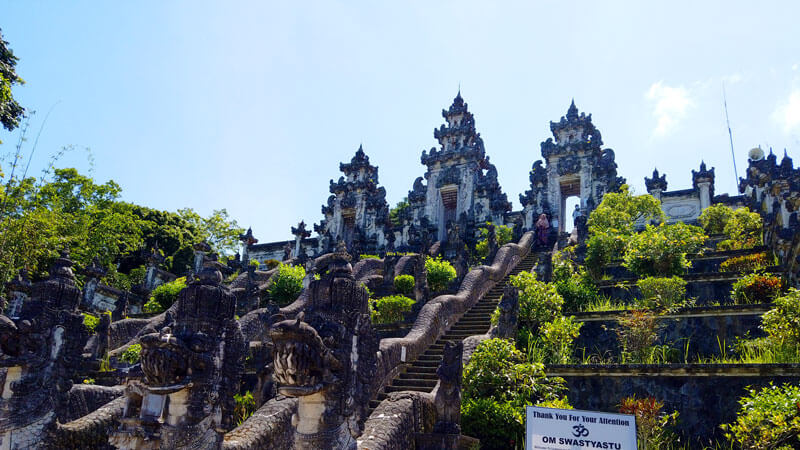
Lempuyang Temple, also known as Lempuyang Luhur, is a sacred Balinese Hindu temple complex on Bisbis Hill in eastern Bali. It is one of Bali’s important spiritual sites and is often associated with Sad Kahyangan Jagat, the six sacred temples believed to help maintain spiritual balance on the island.
The temple complex includes several shrines and seven temple levels, with the highest temple, Lempuyang Luhur, located at about 1,175 meters above sea level. Most visitors first arrive at Penataran Agung Lempuyang, where the famous Gate of Heaven frames Mount Agung in the background.
For travelers, Lempuyang Temple is not only a photo spot. It offers a mix of Balinese spirituality, traditional architecture, mountain scenery, and East Bali’s quieter local atmosphere. The main reasons visitors come here include:
- Seeing the iconic Gate of Heaven with Mount Agung in the background.
- Visiting one of Bali’s most sacred temple complexes.
- Experiencing traditional Balinese temple architecture and stone carvings.
- Exploring a quieter part of East Bali, away from the busiest tourist areas in the south.
- Learning why Lempuyang Temple remains important for Balinese Hindu worship and local culture.
Lempuyang Temple History and Spiritual Importance
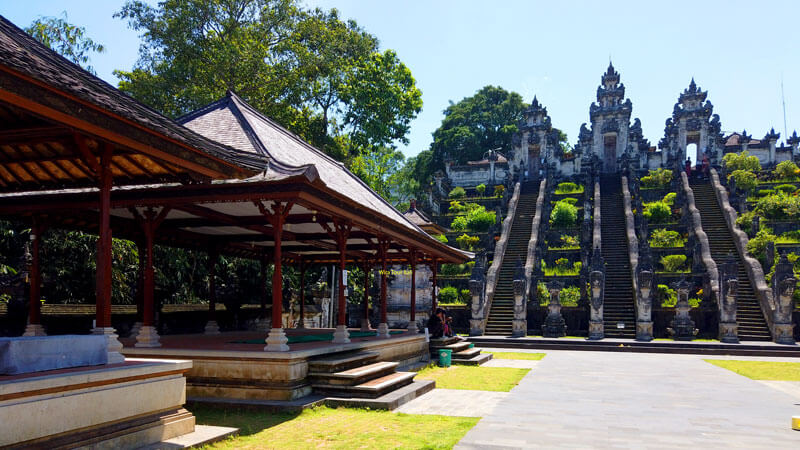
Lempuyang Luhur Temple has deep roots in Balinese Hindu tradition. Local historical references, including lontar manuscripts and village inscriptions, connect the temple with the spiritual protection of Bali and the worship of Ida Sang Hyang Widhi Wasa in the manifestation of Iswara, the guardian of the east.
The temple is also associated with Sad Kahyangan Jagat, the six sacred temples believed to help maintain spiritual balance across Bali. For local worshippers, Lempuyang is not only a scenic mountain temple but also an important place for prayer, purification, and religious ceremonies.
For visitors, this background explains why Lempuyang Temple should be treated with respect. The Gate of Heaven may be the most famous photo spot. Still, the temple’s real importance comes from its role in Balinese spirituality, East Bali culture, and the long-standing traditions preserved by the local community.
Lempuyang Temple Complex: The Seven Sacred Temples
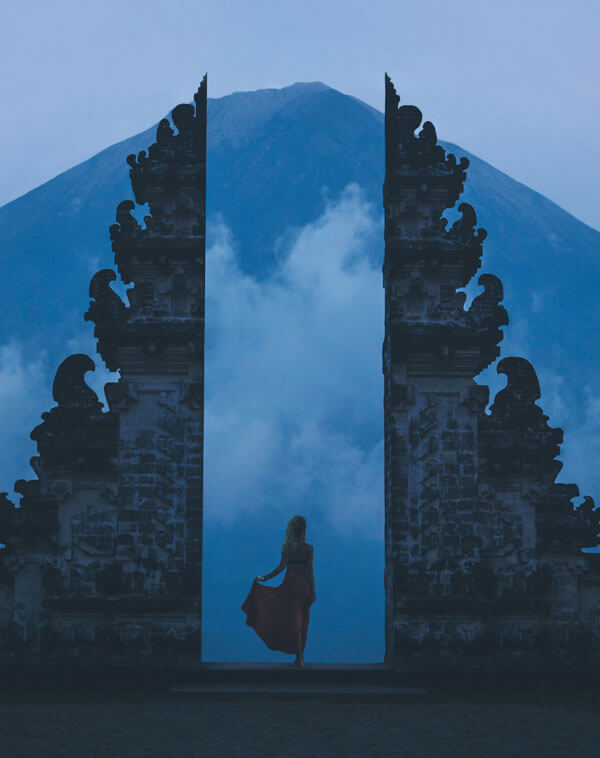
The Lempuyang Temple complex sits on Bisbis Hill in East Bali and includes seven sacred temple levels. Most travelers visit Penataran Agung Lempuyang, the first and most accessible temple, because this is where the famous Gate of Heaven frames Mount Agung in the background.
The full temple complex continues higher up the mountain. Each temple has a different role in the pilgrimage route, but not every visitor continues to the top because the climb becomes physically demanding.
The seven temples in the Lempuyang complex are:
- Penataran Agung Lempuyang: The most visited temple and the location of the Gate of Heaven photo spot.
- Telaga Emas: The second temple, known for its golden-roofed shrine and reachable from the lower temple area.
- Telaga Sawang: A quieter temple at a higher elevation, surrounded by greenery.
- Lempuyang Madya: A prayer stop for Hindu worshippers before continuing higher.
- Puncak Bisbis: A resting point on the mountain route toward the upper temples.
- Pasar Agung: The sixth temple, located before the final ascent to Lempuyang Luhur.
- Lempuyang Luhur: The highest temple in the complex, located at around 1,174 meters above sea level.
Reaching Lempuyang Luhur requires climbing around 1,700 steps through a forested mountain path. For most tourists, Penataran Agung Lempuyang is the main visit point. The upper temples are more suitable for physically prepared visitors who have enough time and understand that these areas are primarily sacred worship sites.
Visiting Penataran Agung Lempuyang: Gate of Heaven, Fees, Photos, and Opening Hours
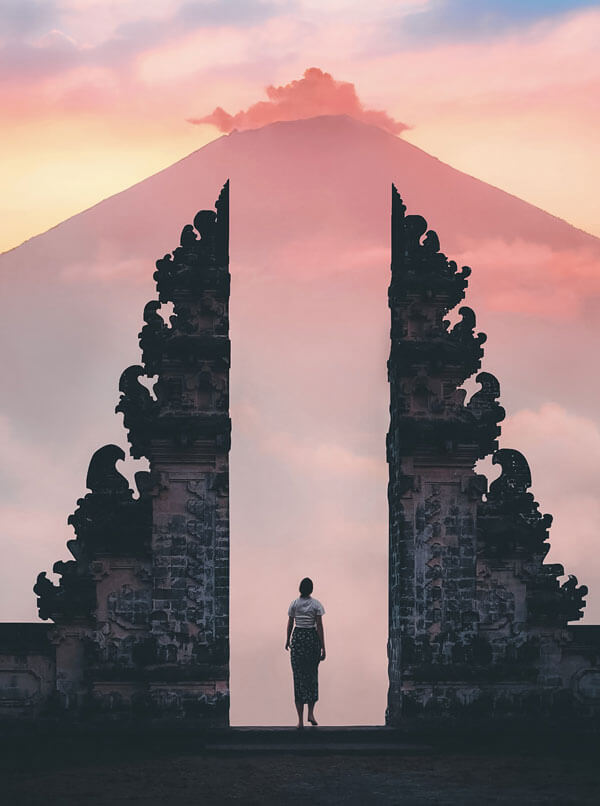
Many visitors who search for Lempuyang Temple are actually looking for Penataran Agung Lempuyang, the lower temple area where the famous Gate of Heaven photo spot is located. This is different from Lempuyang Luhur, the upper temple in the same sacred hill complex.
If your main goal is to see the Gate of Heaven with Mount Agung in the background, your destination should be Penataran Agung Lempuyang.
What You Can See at Penataran Agung Lempuyang
Penataran Agung is best known for its split temple gate, traditional Balinese architecture, and views toward Mount Agung. On clear days, visitors can also see parts of the surrounding East Bali landscape.
The main reasons travelers visit this area are:
- To experience a temple setting that is still important for Balinese Hindu worship.
- To take photos at the Gate of Heaven with Mount Agung in the background.
- To see traditional Balinese temple architecture and candi bentar split-gate design.
- To visit one of the most recognizable sacred sites in East Bali.
Gate of Heaven Photo Spot
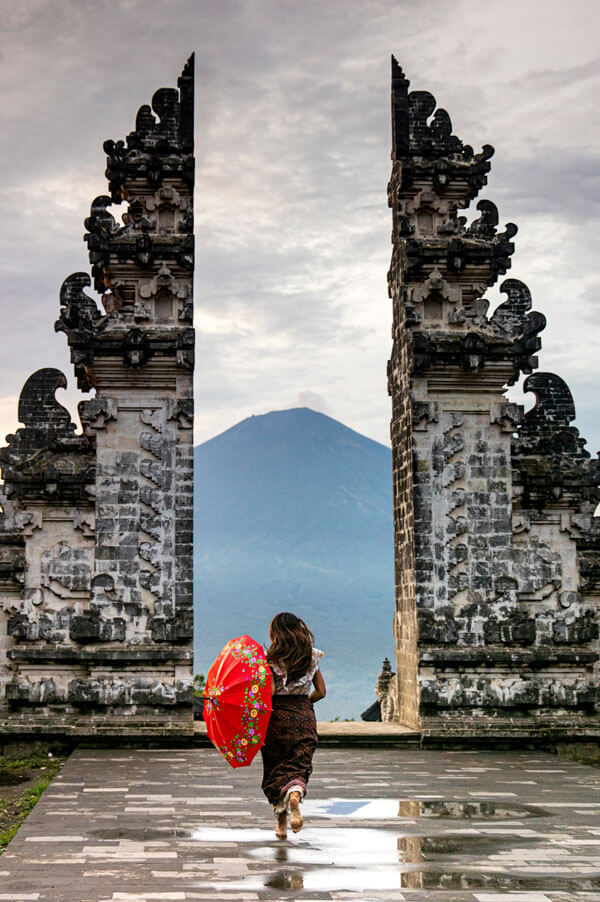
The Gate of Heaven is a candi bentar, or traditional Balinese split gate, facing Mount Agung. This is the most photographed part of Penataran Agung Lempuyang.
Many photos show a water-like reflection below the gate. This reflection is usually created with a mirror or phone-screen effect by local photo attendants. There is no pond or natural water surface directly in front of the Gate of Heaven.
This detail is important because it helps set the right expectation before you visit. The view can be beautiful, but the final photo effect depends on weather, visibility, queue time, and the photographer’s technique.
Penataran Agung Lempuyang Location
Penataran Agung Lempuyang is located in East Bali, in Karangasem Regency, near Jalan Pura Telaga Mas, Abang District. Before you go, open the Penataran Agung Lempuyang location on Google Maps so your driver or navigation app points to the correct temple entrance.
Penataran Agung Lempuyang Entrance Fee
The following fees were last checked from the Wira Tour Bali field/source data and the Wira Bali entrance-fee reference page. Prices at Penataran Agung Lempuyang may change without notice, so visitors should prepare extra cash and confirm the latest fee before departure.
| Category | Price of admission |
|---|---|
| Domestic Travelers | IDR 40,000/person |
| International Travelers | IDR 70,000/person |
| Motorcycle Parking | IDR 3,000/scooter |
| Car Parking | IDR 5,000/car |
| Bus Parking | IDR 10,000/bus |
These prices do not include the local shuttle fee, photo tips, private transport, food, drinks, or other personal expenses.
Shuttle Fee to the Gate of Heaven Area
Visitors normally use a local shuttle from the main parking area to the Penataran Agung Lempuyang entrance area.
| Trip | Shuttle Fee |
|---|---|
| OneWay | IDR 25,000/person |
| Round-trip | IDR 50,000/person |
Estimated total cost:
- Domestic traveler with round-trip shuttle: around IDR 90,000 per person
- International traveler with round-trip shuttle: around IDR 120,000 per person
This estimate does not include private transport, guide service, food, drinks, photo tips, or other personal expenses.
Gate of Heaven Photo Service
At the Gate of Heaven photo spot, local photo attendants usually help visitors take photos and create the mirror-reflection effect. A small donation or tip may be expected, but the amount can vary.
You can also ask a friend or family member to help take your photo, but local attendants usually know the best angle and queue system.
Opening Hours for Tourist Visits
Penataran Agung Lempuyang is generally open daily for tourist visits. Based on the latest checked information:
- Shuttle service starts around 05:00
- The ticket counter opens around 05:30 and closes around 18:00
- Gate of Heaven photo sessions usually start around 06:00
- The sacred temple area remains available for Hindu worship outside tourist hours
Opening hours, shuttle access, and photo procedures may change during temple ceremonies, local religious activities, bad weather, or operational adjustments. Check the latest local information before visiting.
How to Get to Lempuyang Temple
Lempuyang Temple is located in East Bali, so you need to plan transport carefully, especially if you are coming from South Bali, Ubud, Canggu, Sanur, or Nusa Dua.
The drive can take several hours, and most visitors visit Penataran Agung Lempuyang as part of an East Bali day trip.
A private car with a driver is usually the simplest option for a long Lempuyang day trip. It gives you more flexibility with departure time, photo queues, rest stops, and nearby attractions.
If you want to combine Lempuyang with other stops, the most relevant nearby places are:
- Tirta Gangga Water Palace
- Taman Ujung Sukasada Palace
- Tenganan Village
Scooter rental can be an option for experienced riders, but it is not suitable for every visitor. The route is long, and you should only choose this option if you are confident riding in Bali traffic, have the correct license, and are comfortable with mountain roads and changing weather.
Public transportation is not practical for most short visits to Lempuyang Temple because there is no simple, direct tourist route to the Gate of Heaven area.
Best Time to Visit Lempuyang Temple for Photos, Weather, and Fewer Crowds
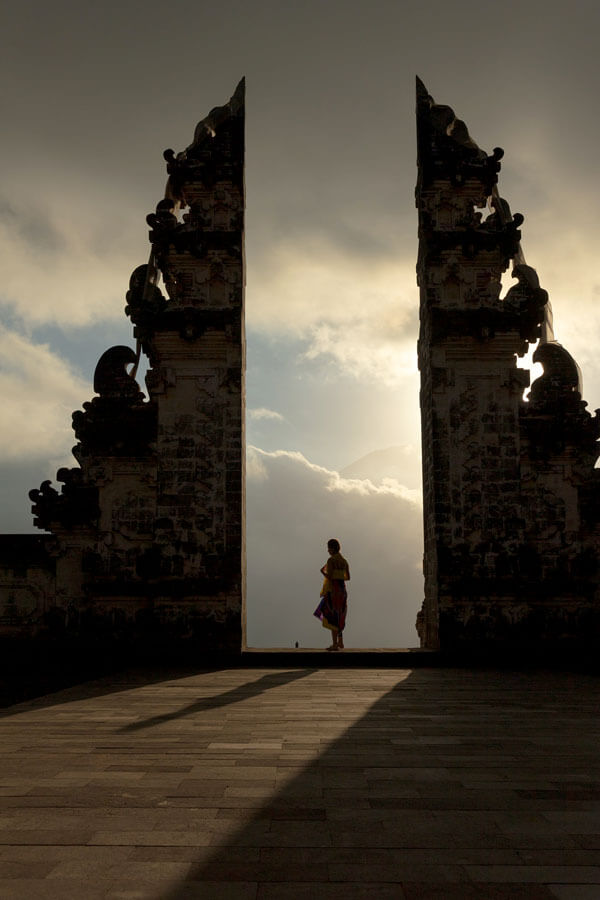
The best time to visit Lempuyang Temple depends on what matters most to you: clearer weather, shorter queues, or seeing the temple during a religious ceremony.
For weather and Mount Agung views, the dry season from around April to October generally gives visitors a better chance of clear skies. However, mountain weather can still change quickly, and views are never guaranteed.
For photos at the Gate of Heaven, arrive early in the morning, ideally around the opening period. Morning light is usually softer, and arriving early can help reduce waiting time before the photo queue gets longer. Still, queue times depend on the season, weather, and visitor numbers.
If you want to avoid the busiest travel periods, try not to visit during July and August, Christmas and New Year holidays, or major school-holiday periods. These dates often bring more visitors to popular Bali attractions, including the Gate of Heaven.
Lempuyang Temple may also be busier during Hindu ceremonies, especially around piodalan. Piodalan at Pura Lempuyang Luhur is associated with Umanis Galungan, which follows the Balinese 210-day calendar.
Visiting during a ceremony can offer a deeper cultural context, but tourist access, photo activity, and movement inside the temple area may be limited. Always follow local instructions and prioritize worshippers.
Lempuyang Temple Dress Code and Etiquette
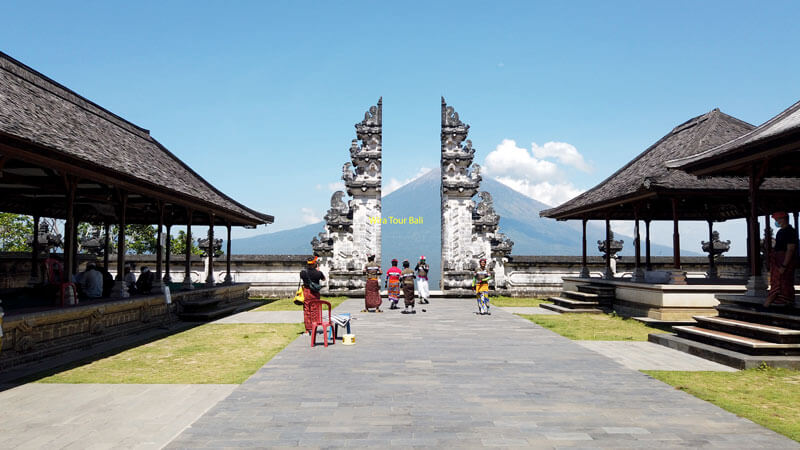
Lempuyang Temple is an active Balinese Hindu temple, not only a photo location. Dress and behave respectfully, especially around prayer areas, shrines, and ceremonies.
Wear modest clothing that covers your shoulders and knees. A sarong and waist sash are usually required before entering temple areas. Sarongs and sashes may be available near the entrance, but bringing your own is safer during busy periods.
Basic etiquette to follow:
- Do not climb shrines, gates, walls, or sacred structures.
- Do not interrupt religious ceremonies or stand too close to worshippers.
- Do not step on canang sari, the small flower offerings placed on the ground.
- Do not spit, litter, shout, swear, or use offensive language inside the temple area.
- Follow instructions from temple staff, local guides, or pecalang.
- Visitors who are menstruating are traditionally asked not to enter sacred prayer areas.
For more details on what to wear before entering temples in Bali, read our Bali Temple Dress Code guide.
FAQ About Visiting Lempuyang Temple
Are there toilets and food stalls near the Gate of Heaven area?
Yes, visitor facilities such as toilets and small food stalls are usually available around the Penataran Agung Lempuyang visitor area. You can normally find simple snacks and drinks nearby.
Still, it is better to bring your own drinking water, especially if you arrive early, visit during a busy period, or plan to continue to other East Bali attractions after Lempuyang.
Lempuyang Temple Guide Conclusion
Lempuyang Temple is best known for the Gate of Heaven at Penataran Agung Lempuyang, but it is also an active sacred Hindu temple complex in East Bali. Before visiting, plan your transport, check the latest entrance and shuttle fees, arrive early if you want photos, and follow the temple dress code.
The most important things to remember are simple: the famous photo spot is at Penataran Agung, the mirror reflection is a photo effect, Mount Agung views depend on the weather, and local temple rules must be respected.
Prefer reading in Bahasa Indonesia? Open the Indonesian version of this Lempuyang guide.
 Besakih Temple Visitor’s Guide: Unveiling Bali’s Spiritual Gem and Traveler Insights

We'd love to hear from you! Share your thoughts or experiences in the comments below!