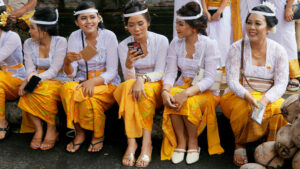
This page explains the Bali Temple Dress Code for first-time visitors, including what to wear, what to avoid, and what temple staff usually check before you enter a Balinese Hindu temple. If you are planning to visit a Balinese Hindu temple, dress for the gate first. The safest standard is simple: cover your shoulders and knees, then wear a sarong and sash before entering inner temple areas.
This guide only covers clothing rules and basic etiquette for temple entry in Bali. It is not a general what to wear in Bali guide, and it is not a guide to traditional ceremonial dress.
Last reviewed: 17 April 2026 (WITA). We review this page quarterly or whenever provincial rules change.
Need the Indonesian version of this guide? Read Panduan Busana Liburan ke Pura.
Table of Contents[Hide][Show]
Quick Rules for Bali Temple Entry
Before you go to the temple gate, remember these important clothing rules.
- Cover your shoulders and upper arms.
- Keep your knees covered.
- Wear or carry a sarong that falls below the knees.
- Add a sash at the waist over the sarong.
- You can wear shorts only if a sarong fully covers them.
- If you wear a sleeveless top, cover your shoulders and add a sarong.
- Remove footwear if signs or temple staff tell you to.
- Avoid swimwear, crop tops, sheer clothing, or very tight clothing.
Bali Temple Dress Code by Area
Outer Courtyards
- Cover your shoulders and knees.
- Some temples also require a sarong and sash.
- Staff usually allow footwear unless they tell you otherwise.
Inner and Prayer Areas
- Cover your shoulders.
- Cover your knees.
- Most temples require a sarong and sash.
- Staff may ask you to remove your footwear before you enter.
Inner areas are the main prayer zones and shrines. Staff may limit access if your clothing does not meet the standard.
What Staff Usually Check at the Gate
Most temple dress checks are quick. Staff usually look for four things:
- Covered shoulders.
- Covered knees.
- A sarong that falls below the knees.
- A sash tied over the sarong.
If your outfit does not fully comply, staff will require you to add a sarong, adjust your top, or remain in the outer courtyard.
Dress modestly. Avoid tight, sheer, or low-cut clothes. Make sure to cover your shoulders, upper arms, knees, and midriff. Staff will check your clothes at the entrance and again near the prayer areas.
Bali Temple Dress Code for Women, Men, and Children
Women
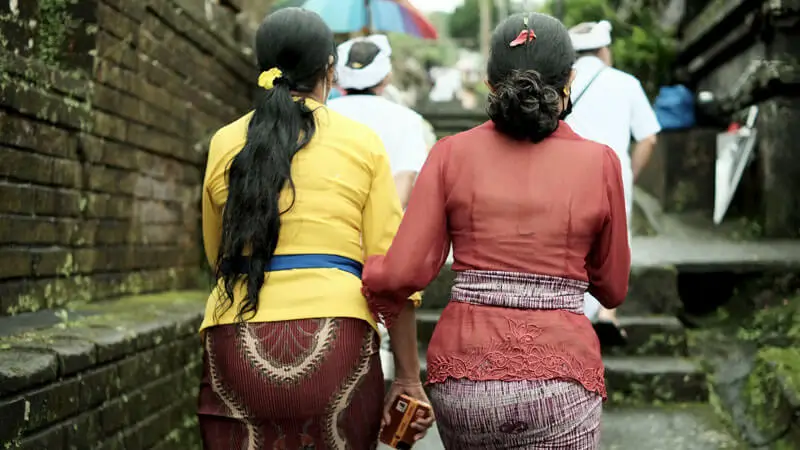
You do not need a kebaya for a regular temple visit. For most visitors, a sleeved top plus a sarong and sash is enough.
A practical outfit usually looks like this:
- A sleeved blouse, shirt, or T-shirt.
- Trousers or a skirt underneath if you want.
- A sarong over the lower body.
- A sash tied at the waist.
If your skirt is above the knee, wrap a sarong over it so the fabric falls below the knees.
If you wear a sleeveless dress, cover your shoulders with a scarf or change into a sleeved top before entering.
Swimwear and beach cover-ups are not suitable for temple entry.
At many temples, staff ask women who are menstruating, in late pregnancy, or in the first weeks after giving birth to remain in the outer courtyard. Policies vary by temple. If you are unsure, quietly ask a female staff member at the entrance.
Men
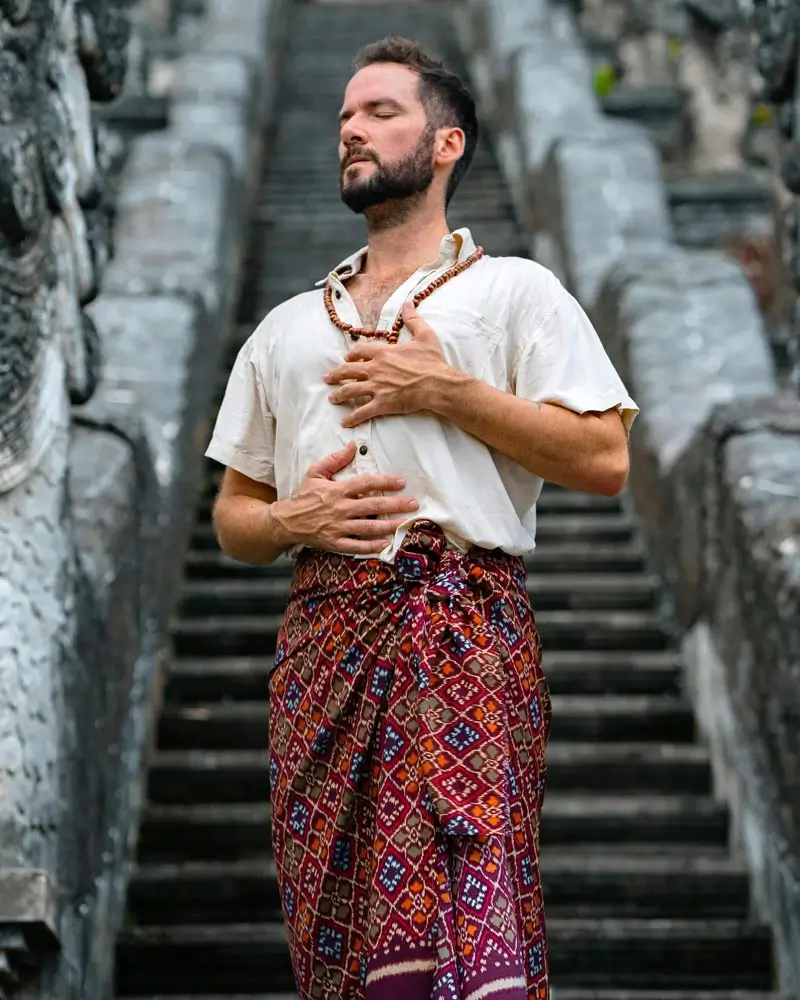
A simple T-shirt or short-sleeve shirt is acceptable at most temples when paired with a sarong and sash.
A practical outfit usually looks like this:
- A T-shirt or short-sleeve shirt.
- Shorts or trousers underneath.
- A sarong over the lower body.
- A sash tied at the waist.
You can wear shorts if a sarong fully covers them and falls below the knees.
Long trousers may work in outer courtyards, but inner prayer areas often still require a sarong and sash.
Remove caps or fashion hats before you enter the inner areas.
Children
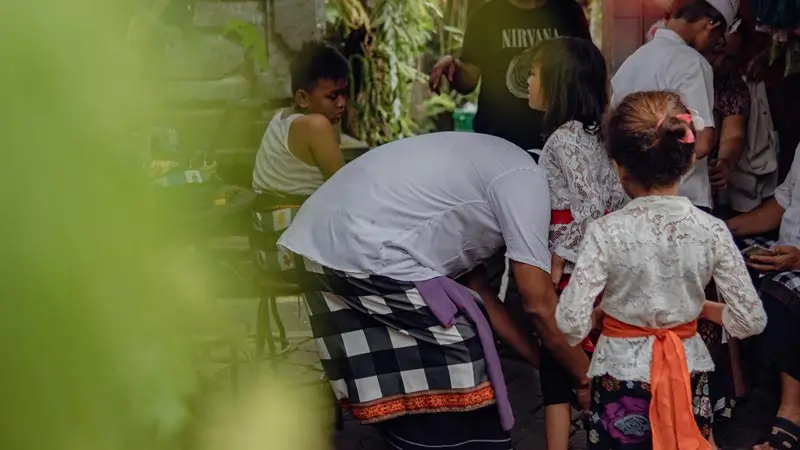
Children should also dress modestly for temple visits. For most temple visits, a child can wear:
- A T-shirt.
- Knee-length shorts or a skirt underneath.
- A lightweight sarong for inner areas.
- A small sash at the waist.
Some larger temples provide child-sized sarongs, but bringing one is usually easier.
Do You Need a Kebaya or Udeng?
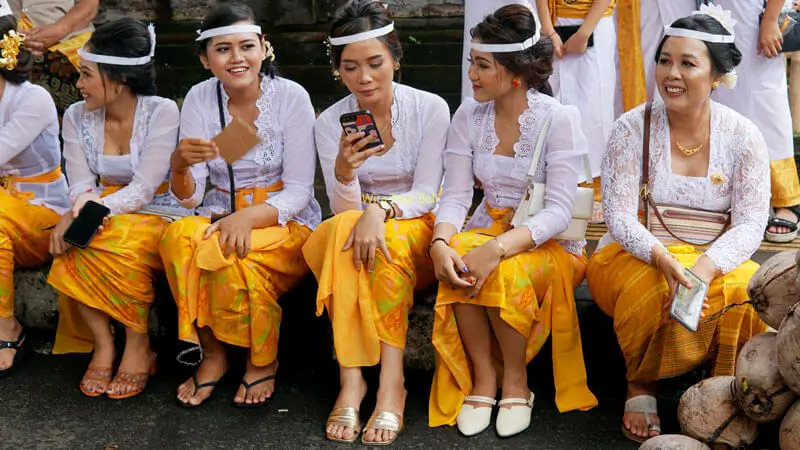
Tourists do not need a kebaya or an udeng for a standard temple visit.
Balinese Hindus and locals often wear these items when praying or joining ceremonies. If someone invites you to a ceremony, your host will usually explain what to wear.
Common Clothing Questions: Shorts, Leggings, Sleeveless Tops, and Crop Tops
Many visitors arrive in normal sightseeing clothes and make small adjustments before entering. These are the most common clothing questions at temple gates.
Shorts
Shorts are fine if a sarong covers them properly and falls below the knees. On their own, they often do not meet the standard for inner temple areas.
Leggings
You can wear leggings if you cover your knees with a sarong and tie a sash over it. Avoid leggings that are sheer or skin-tone, as they can look like bare legs.
Sleeveless Tops
You can wear sleeveless tops only if you cover your shoulders with a scarf, shawl, or extra layer and wrap the lower body in a sarong.
For very thin straps or low necklines, changing into a sleeved top is the safer option.
Crop Tops
Crop tops are not appropriate for temple visits, even if you wear a sarong. Your midriff should be covered.
Footwear Rules at Balinese Temples
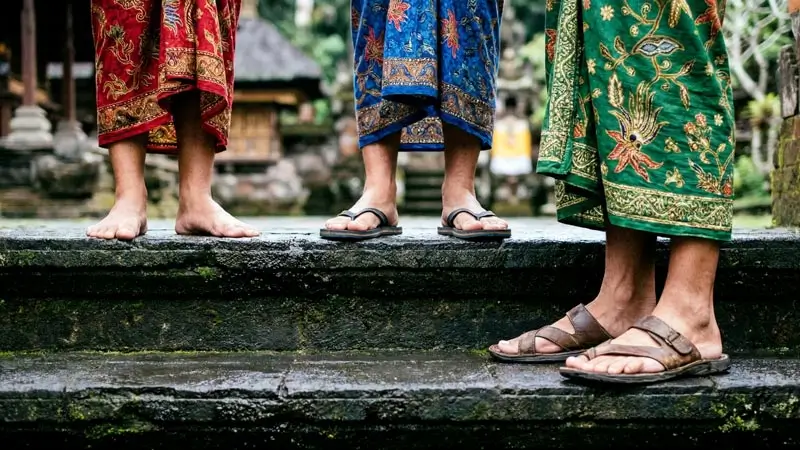
Sandals are usually the easiest option because they are simple to remove.
Staff usually allow shoes or sandals in many outer courtyards and non-sacred areas.
Before you enter prayer spaces, staff may ask you to remove them and walk barefoot.
At purification areas such as Tirta Empul, temples require bare feet in and around the water. Socks are not suitable there.
Having footwear that is easy to remove, plus your sarong and sash ready, makes gate checks faster, especially on busy or holy days.
Bali Temple Dress Code: Sarong and Sash Rules
When a Sarong and Sash Are Required
At most temples, expect to wear a sarong and sash at the entrance or before entering inner prayer areas.
This usually applies to all genders and most ages once children enter inner spaces:
- women
- men
- older children entering inner areas
The safest standard is a sarong that falls below the knees. Some checkpoints prefer a longer length.
Even if you already wear long trousers or a long skirt, temples may still require a sarong and sash. Outer courtyards can be more relaxed, but carrying your own set helps you comply anywhere.
How to Wear a Sarong and Tie the Sash
- Wrap the sarong around your waist so the hem falls below the knees.
- Overlap the front panels securely so they do not open while you walk.
- Tie the sash at the natural waist over the sarong. If needed, use a small safety pin to keep the wrap secure.
- Wear the sarong over shorts, trousers, or a skirt. The sash sits at the waist on top of the sarong.
In Balinese Hindu tradition, the sash also has symbolic meaning. It helps mark a respectful, composed state before entering a sacred place.
Local Terms You May See
You may see these words on signs or hear them at the entrance:
- Kamen: sarong or temple wrap.
- Selendang / sabuk: sash or belt worn over the sarong.
- Senteng: a type of sash used in temple dress.
If staff mention one of these terms, they are usually referring to the lower-body wrap and the sash tied over it.
Renting or Borrowing a Sarong
Many temples provide sarongs and sashes at the gate as a loan, as part of admission, or for a small fee.
Policies vary, so carrying a little cash can help. At busy temples, rental queues can take extra time. Bringing your own sarong and sash is the easiest way to avoid delays.
How the Dress Code Works at Different Temples
The basic temple dress code stays similar across Bali. However, each temple may handle entry, walking areas, and purification access differently.
Uluwatu Temple
At Uluwatu, staff commonly provide sarongs and sashes at the entrance if your outfit does not meet the dress code.
Because the paths are exposed to wind, secure your sarong properly before walking around the clifftop area.
If you also need entry, sunset, and walking details, read our Uluwatu Temple visitor guide.
Tirta Empul
At Tirta Empul, a sarong and sash are required for visitors.
If you join the purification ritual, staff may provide an extra cloth to wear over your own sarong in the pools.
Wear quick-dry underwear or swimwear under the ritual cloth and bring dry clothes for after the purification.
If you plan to join the purification ritual, read our Tirta Empul dress code and purification guide.
Tanah Lot
At Tanah Lot, inner shrine areas require a sarong and sash.
Around the wider complex, dress is often more relaxed, but modest clothing with covered shoulders and knees is still the safest choice.
If you walk through wet or narrow access areas, make sure your sarong is secure and does not drag.
If you want the site layout, access, and visit timing after you understand the dress code, read our Tanah Lot Temple guide.
Why the Bali Temple Dress Code Matters
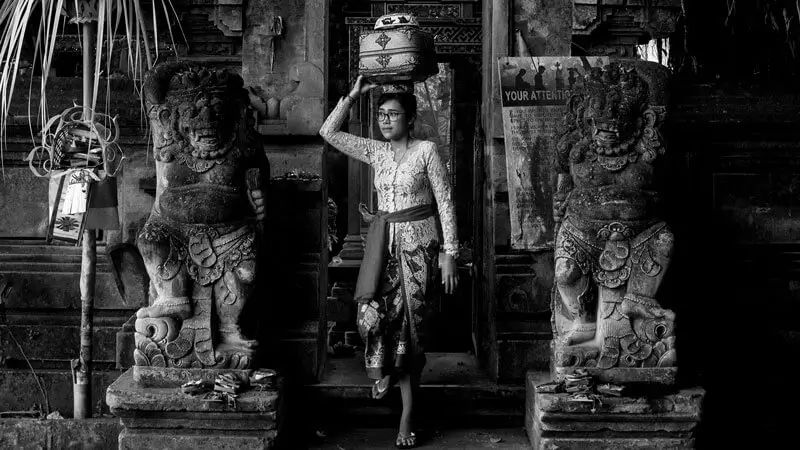
The dress code for temples in Bali is important because these temples are places where people actively worship, not just tourist attractions.
Modest dress is required to respect worshippers and keep order at shrines. Following the dress code ensures faster checks at gates, especially on busy or holy days. If you wear inappropriate clothing, you may be restricted from entering outer courtyards or may need to change before you can enter.
Recent years have brought stricter provincial guidance, strengthening respect for sacred sites. Bali Governor’s Circular Letter SE No. 7/2025 and the official Love Bali guidelines remind visitors to dress modestly, respect holy places, and follow local staff instructions.
Always follow the most current directions provided by temple authorities, the Bali Tourism Office, and on-site staff.
Basic Temple Etiquette Beyond Clothing
Clothing is only one part of respectful temple behavior.
- Do not step on or kick offerings on the ground.
- Do not climb on or sit on temple gates, shrines, or statues.
- Avoid pointing the soles of your feet toward shrines or people who are praying.
- Keep your voice low and avoid public displays of affection in prayer areas.
- Ask before taking close-up photos of people in prayer or ceremonial dress.
- Do not spit or leave rubbish on the temple grounds.
A polite greeting is always appreciated. If you feel comfortable, you can say “Om Swastiastu.” A simple “hello” or “good morning” is also fine.
Practical Items for a Smoother Entry
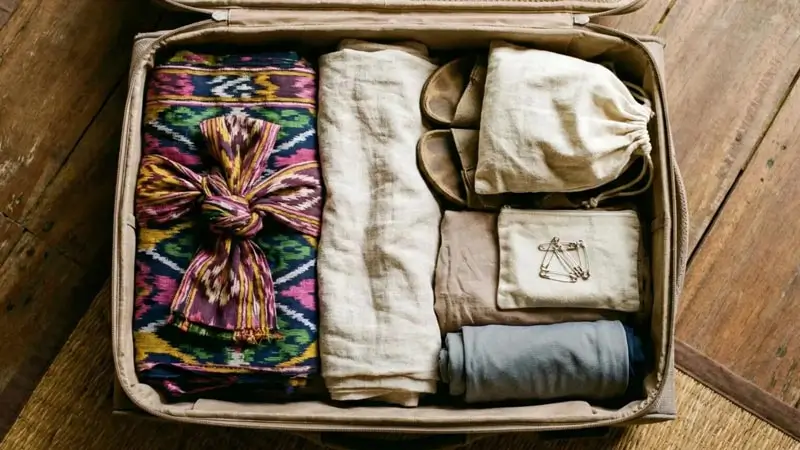
These are the only extra items worth bringing if you want an easier gate check:
- 1 sarong and 1 sash per person
- a light scarf or shawl for shoulder coverage
- sandals that are easy to remove
- a small bag for footwear
- a few safety pins if your sarong is loose
- a change of dry clothes if you plan to join a purification ritual
FAQ
What should I wear to a temple in Bali?
Wear a sleeved top, keep your knees covered, and add a sarong and sash over the lower body. This applies to men, women, and older children. Avoid beachwear, tight or sheer clothing, and tops that show the midriff.
Can I wear shorts to a Bali temple?
Yes, if a sarong fully covers the shorts and falls below the knees.
Are hijabs or headscarves allowed at Balinese temples?
Yes. You can keep your hijab or headscarf on. Just make sure your shoulders, knees, and lower body meet the usual temple rules.
Can I wear leggings under a sarong?
Yes. Leggings are acceptable under a sarong if the sarong covers below the knees and is tied properly with a sash.
Do children need sarongs at Balinese temples?
In inner prayer areas, many temples expect children to wear sarongs as well. Bringing one is the safest option.
What colors are appropriate at Balinese temples?
Subtle and modest colors are the easiest choice. Avoid offensive graphics or very flashy prints. White is common for worshippers, but it is not required for visitors.
Where should I leave my shoes?
Follow local signs. You can carry your sandals or shoes in a small bag, but keep paths clear of offerings and walkways.
About This Guide
- Last reviewed: 17 April 2026 (WITA).
- Who wrote this guide: Wayan Suadnyana, Bali travel editor at Wira Tour Bali.
- Who reviewed it: Desak and Ayu Artati from Sales and Operations.
- How it was checked: The page was updated on 17 April 2026 (WITA) after checking Bali Governor’s Circular Letter SE No. 7/2025, guidance from the Bali Tourism Office, and official information from major temple sites. A human editor verified all facts.
- Why this guide exists: To help first-time visitors understand temple clothing rules clearly, avoid dress-check problems, and enter respectfully.