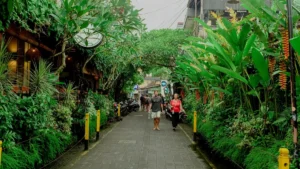
Looking for free things to do in Ubud without buying tour tickets? Ubud has several places you can walk through, browse, or view with little or no entry cost.
In Ubud, what is “free” depends on how you visit. While some views from public areas cost nothing, actual entry, parking, donations, sarong rental, tips, transport, or photo spots can increase your overall cost.
This guide helps you check:
- What should not be treated as free?
- What is free?
- What is free-to-view?
- What is low-cost?
Use this page for budget-friendly Ubud cost checks. It is not a full Ubud itinerary, paid tour guide, hotel guide, or general Ubud travel planning page.
Prefer reading in Indonesian? See our related guide: Tempat Wisata Gratis dan Murah di Ubud.
Table of Contents[Hide][Show]
Free and Low-Cost Places in Ubud, With Possible Extra Costs+−
- Campuhan Ridge Walk: Free to Walk, Extra Costs Possible
- Ubud Art Market: Free to Browse, Not Free to Buy
- Ubud Palace Public Areas: Generally Free by Day, Shows Paid
- Saraswati Temple Area: Public Views and Paid Entry Can Differ
- Rice Field Paths Near Central Ubud: Free Only on Public Paths
- Petulu Heron Watching: Free to View, Donations May Apply
- Small Galleries or Textile Shops: Free Only After You Check
- Local Life, Offerings, and Ceremonies: Free to Observe Only When Appropriate
- Warung or Coffee Stop: Low-Cost Break, Not Free
Paid or Not-Always-Free Ubud Stops to Keep Separate+−
- Tegalalang Rice Terrace: Free-to-View in Some Areas, Not Fully Free
- Ubud Monkey Forest: Paid Attraction, Not Free
- Waterfalls Near Ubud: Usually Low-Cost or Paid
- Coffee Plantation Visits: Free Entry Is Not Always Cost-Free
- Museums, Workshops, Wellness, and Paid Tours: Keep Them Separate
- Seasonal Events and Free Tours: Check the Current Terms First
- When You Need a Broader Ubud Guide
- FAQs About Free Things to Do in Ubud
What Counts as Free or Low-Cost in Ubud
A place may seem free, but the true cost depends on how you can get there, how you travel, and what you decide to do once you’re there.
Free to Browse or Observe
Examples:
- Browsing at Ubud Art Market
- Watching daily life from public areas
- Viewing offerings or ceremonies only when the situation is clearly open to public viewing
This means you can look, browse, or observe from a public area.
It does not include:
- Entry into restricted areas
- Private-space access
- Close-up participation
- Purchases
- Tips or donations
Free to Walk or View, Costs May Apply
Examples:
- Campuhan Ridge Walk
- Petulu heron watching
- Ubud Palace public areas
- Clearly, public rice field paths
- Temple or palace views from public areas
The main walk or view is free, but parking, toilets, donations, transport, or small local fees may apply.
Low-Cost, But Not Completely Free
Examples:
- Warung meals
- Coffee stops
- Some temple access
- Some rice terrace access
These stops can help keep your Ubud visit affordable. Do not count them as free.But you should not treat them as free.
Paid Activities, Not Free
Examples:
- Monkey Forest
- Waterfalls
- Workshops
- Paid cultural shows
- Rafting or cycling tours
These activities may still be worth doing. Please plan them as paid activities, not free stops. They are worth doing, but you should plan them as paid activities.
Not Confirmed
Examples:
- Seasonal festival sessions
- Free tours
- Coffee plantation visits
- Gallery access that may change
- Informal village access
Check the current rules before planning these as free activities. Planning them as free activities.
Free and Low-Cost Places in Ubud, With Possible Extra Costs
This is not a complete list of Ubud attractions. It focuses on places and activities that may fit a free or low-cost visit if you understand the possible extra costs.
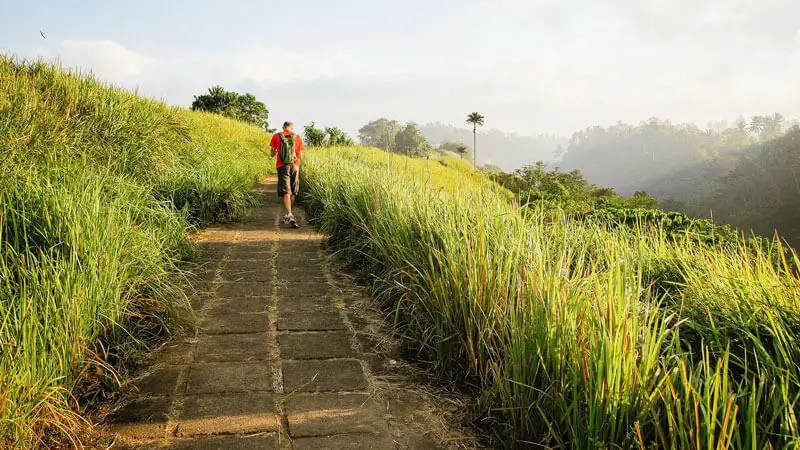
Campuhan Ridge Walk: Free to Walk, Extra Costs Possible
Campuhan Ridge Walk is a simple, free outdoor activity near central Ubud. The trail runs along a green ridge, offering views of the valley, peaceful lanes, local houses, and a few small cafés.
The walk itself is normally free. Your real cost depends on transport, parking, drinks, and café stops.
Keep it low-cost:
- Choose this walk if you already stay near central Ubud.
- Avoid making a long paid transport trip only for this stop.
- Treat cafés along or near the route as optional.
- Expect some steps, uneven paths, and exposed areas.
- Keep the walk realistic in hot weather.
Ubud Art Market: Free to Browse, Not Free to Buy

The Ubud Art Market is free to browse. You can walk among the stalls, see textiles, baskets, carvings, jewelry, clothes, and souvenirs, then decide whether something is worth buying.
The best free value is price comparison. You can look around first instead of buying at the first stall.
Cost notes:
- Browsing is free.
- Buying is optional.
- Parking may cost extra if you arrive by scooter or car.
- Small cash helps if you decide to buy.
- You do not need to purchase anything to browse.
- Please keep this a free stop only if you are comfortable leaving without buying.
Ubud Palace Public Areas: Generally Free by Day, Shows Paid
Ubud Palace, also known as Puri Saren Ubud, sits in the center of town near Ubud Art Market.
The daytime public area is generally free to view. Evening dance performances, special access, and parking are not part of a free visit.
Before you go:
- Treat the daytime public area as a short free-to-view stop.
- Treat evening dance shows as paid cultural activities.
- Check access signs or staff directions.
- Palace access can be limited by events or local activity.
- Pair the palace with the Ubud Art Market to avoid a separate transport trip.
Saraswati Temple Area: Public Views and Paid Entry Can Differ

Saraswati Temple, also known as Ubud Water Palace, stands out for its Balinese architecture and beautiful lotus pond. It is located near Ubud Palace and the Ubud Art Market.
You may be able to view parts of the lotus pond or temple architecture from public areas. However, visitor entry, temple-area access, or evening performances may involve a fee depending on the current rules.
Access notes:
- Use the lotus pond view as a possible central Ubud add-on.
- Do not treat it as a guaranteed free temple visit.
- Check the current entrance rule before walking into the visitor area.
- Public view, visitor entry, and evening performance are different cost categories.
- Dress modestly around temple areas, especially if you plan to enter beyond public viewing points.
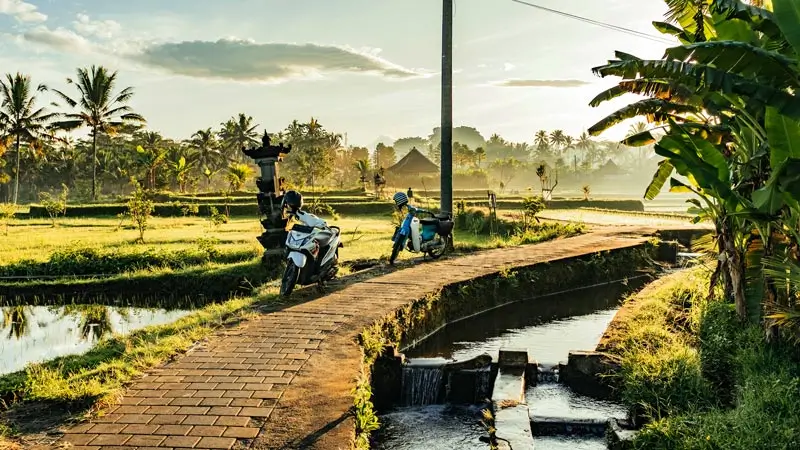
Rice Field Paths Near Central Ubud: Free Only on Public Paths
Ubud still has small rice field paths near areas such as Kajeng, Subak Juwuk Manis, Penestanan, and some village lanes. They can be good for a short walk if the path is clearly open to visitors.
The view is often the free part. The cost usually appears when you need transport, parking, a small donation, or when the path leads into a managed or private area.
Before you walk:
- Pick a walking route that is close to where you are staying. This way, you will not spend more on transportation than you do on the walk itself.
- Stay on paths that visitors or local walkers already use.
- Prepare some small cash in case you see a donation box or a local access fee.
- Do not enter rice fields, family compounds, or farm paths without clear permission.
- Turn back if the path looks blocked, private, or confusing.
Petulu Heron Watching: Free to View, Donations May Apply

Petulu Village is known for white herons returning to the village trees in the late afternoon. It is a quiet option if you want something different from the busier streets of central Ubud.
This does not need to be treated like a ticketed attraction. The value is simple roadside viewing. Possible costs include donations, transport to Petulu, or a local request on arrival.
Plan it realistically:
- Visit in the late afternoon for the practical viewing window.
- Stay in public roadside areas unless residents clearly allow access.
- Prepare small cash in case donations are requested or encouraged.
- Avoid blocking local traffic or private entrances.
- Factor in transport, because Petulu is not easy to walk to from central Ubud for many visitors.
Small Galleries or Textile Shops: Free Only After You Check
Ubud has small galleries, craft shops, and textile spaces where visitors may be able to browse without paying an entry fee. This can be a useful cultural stop if entry is clearly free.
The main difference is casual browsing versus a formal visitor experience. A small shop may allow browsing, while a museum, exhibition, workshop, or guided program may require payment.
Before entering:
- Ask whether entry is free if the access rule is unclear.
- Treat purchases as optional, but remember they are the main expected cost in shops.
- Treat special exhibitions, workshops, guided programs, and museums as paid unless verified.
- Keep this as a free stop only when casual browsing is clearly allowed.
Local Life, Offerings, and Ceremonies: Free to Observe Only When Appropriate
Central Ubud often gives visitors quiet chances to see daily Balinese life, including offerings, temple preparations, local routines, and occasional ceremonies or processions.
This is not a scheduled attraction or a performance. There is usually no ticket, but visitors still need to respect local boundaries.
Respect the boundary:
- Observe only from public space.
- Follow local directions.
- Do not enter temples, family compounds, or ceremony areas without definite permission.
- Ask first before taking close-up pictures of people.
- Treat the situation as private if it feels private.
- Dress modestly near the temple areas.
Warung or Coffee Stop: Low-Cost Break, Not Free
A warung is a simple local place to eat or drink coffee, and it isn’t free. However, it can help make your visit to Ubud more affordable. Warungs are often a good option for a low-cost meal.
This works best when the stop is already near your walking route. A cheap meal can become less budget-friendly if you add transport, choose a high-traffic tourist café, or order without checking the menu price.
Budget tips:
- Check menu prices before ordering.
- See if there’s any extra tax or service charge added to your bill.
- Pick places that are close to where you’re already going.
- Try not to spend more on getting there than on the meal or snack itself.
- Treat coffee stops, snacks, and meals as planned low-cost spending.
Paid or Not-Always-Free Ubud Stops to Keep Separate
Some popular activities in Ubud often appear on budget travel lists, but many of them are not free. Keep these activities separate from your free-focused plan.
Tegalalang Rice Terrace: Free-to-View in Some Areas, Not Fully Free
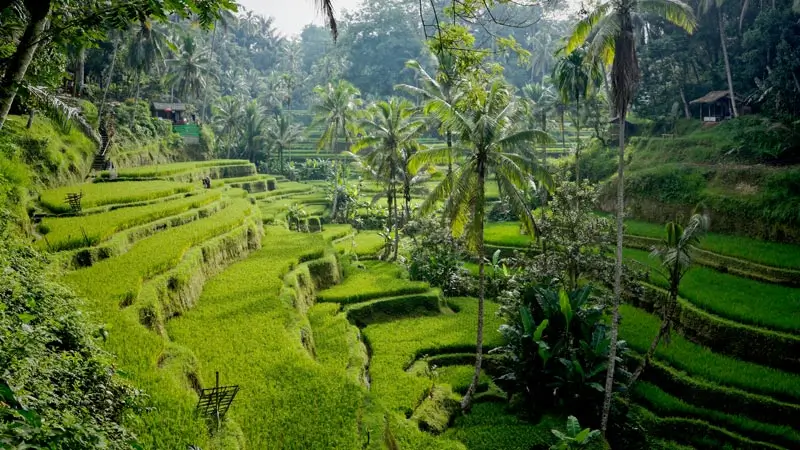
Tegalalang Rice Terrace can be viewed for free from some public or roadside areas, but it is not fully free. Entering terrace areas, using photo platforms, trying swings, or entering managed viewpoints may involve fees.
Seeing the terraces from the roadside is different from visiting the managed areas for tourists.
Before you assume your visit will be free, keep these tips in mind:
- Check signs before entering.
- Ask clearly about any fee before walking in.
- Avoid paid swings or photo platforms if you want to keep costs low.
- Count it as free only if you know your exact entry point does not charge a fee.
Ubud Monkey Forest: Paid Attraction, Not Free
Ubud Monkey Forest is not a free thing to do in Ubud. The main sanctuary requires an entrance ticket.
You may sometimes see monkeys in the surrounding area, but that is not the same as visiting the sanctuary. If you want the full experience, plan it as a paid activity.
Waterfalls Near Ubud: Usually Low-Cost or Paid
The waterfalls near Ubud are beautiful, but most require an entrance fee. You might also need to pay for parking, a donation, toilet use, or local access.
Plan waterfalls as paid or low-cost unless you have confirmed an access point with no required fee. For most visitors, waterfalls fit better in a broader Ubud activity plan, not a free-only plan.
Coffee Plantation Visits: Free Entry Is Not Always Cost-Free
Some coffee plantations near Ubud may advertise free entry, free tastings, or short free tours. That does not mean the whole visit is cost-free.
Tastings, Luwak coffee, purchases, tips, transport, or upgraded experiences may cost extra.
Before planning a free coffee plantation visit, check:
- Whether any purchase is expected
- The exact location
- Entry rules
- Tasting policy
- Possible extra costs
Museums, Workshops, Wellness, and Paid Tours: Keep Them Separate
Some activities are useful for a broader Ubud trip, but they should not be treated as free activities.
This includes:
- Art museums and paid galleries
- Silver-making workshops
- Batik workshops
- Cooking classes
- Yoga classes
- Spas
- Rafting
- Cycling tours
- Paid cultural shows
These activities may still be worthwhile, but keep them separate from your free activity plan. Use a larger Ubud activity guide if you want to compare paid options.
Seasonal Events and Free Tours: Check the Current Terms First
Seasonal events, festival sessions, and free tours often change depending on the date, organizer, venue, or year.
Even if a tour is called “free,” you might still need to tip, donate, register, or make a minimum purchase.
Before treating an event or tour as free, check:
- Whether registration is required
- Whether tips or donations are expected
- Whether a minimum purchase is involved
- Whether the meeting point or venue has changed
- Whether the session is still running on your travel date
How to Keep Your Ubud Visit Free or Low-Cost
A free plan is most effective when you handle transportation, manage small cash costs, and pay for add-ons.
Keep Nearby Stops Together
Choose stops that sit close to each other instead of chasing every free place across Ubud.
Good low-cost combinations:
- Campuhan Ridge Walk plus a simple warung or coffee stop nearby
- Ubud Art Market plus Ubud Palace public areas
- Central Ubud streets plus Saraswati Temple views, after checking current access rules.
- A clear public rice field path near your accommodation.
This makes the visit easier and reduces transport costs.
Plan for Minor Cash Costs
You might still run into small expenses, even if you do not need a main entrance ticket.
It is a good idea to bring some small Indonesian rupiah notes for things like:
- Parking
- Toilets
- Donations
- Local access fees
- Drinks or snacks
- Simple warung meals
- Optional purchases
Not every free stop will ask for money, but carrying small change can help prevent unanticipated expenses.
Check Access Before Entering
Not every path, temple area, gallery, rice field, or village lane is open to visitors.
Before entering, look for:
- Access signs
- Staff or local instructions
- Donation boxes
- Clear public walking paths
- Restricted or private areas
If access is unclear, treat the place as not confirmed. Do not force it into a free itinerary.
Avoid Common Free-Activity Mistakes
It’s easy to spend more than you planned in Ubud if you assume every place that looks free actually is.
Avoid these mistakes:
- Counting free-to-view as free-to-enter
- Forgetting small costs such as parking, toilets, donations, drinks, or transport
- Entering private land, sacred areas, family compounds, or ceremony spaces without definite permission is prohibited.
- Treating ticketed attractions, workshops, wellness activities, or paid tours as part of a free plan.
For official visitor conduct in Bali, read the Bali Provincial Government travel guidelines before entering temples or ceremony areas.
When You Need a Broader Ubud Guide
This page is for travelers who want to identify free and low-cost things to do in Ubud and avoid surprise costs.
It is not meant to replace:
- A full Ubud itinerary
- A paid activity comparison
- A hotel guide
- A transport guide
- A general first-time Ubud travel guide
FAQs About Free Things to Do in Ubud
What is the easiest free thing to do in Ubud if I only have one hour?
Stay in central Ubud. Visit Ubud Art Market, explore the public areas of Ubud Palace, and walk around the nearby streets. These places are close to each other and do not need much transport.
How much small cash should I carry for free activities in Ubud?
Bring small Indonesian rupiah notes for parking, toilets, donations, local fees, or a drink. Even if the main activity is free, small expenses can appear.
Are the free walking routes in Ubud suitable when it rains?
Some are still possible, but rain can make steps, narrow paths, and rice field routes slippery. If the route looks muddy, unclear, or unsafe, choose a shorter central Ubud walk instead.
Can I enjoy free Ubud stops without paying for transport?
You can explore central Ubud easily. If you stay nearby, you can walk to the market, palace, Saraswati Temple, and the surrounding streets. However, if you want to visit Petulu or see rice field trails that are farther away, you will need transportation.
Am I allowed to take photos at free sites in Ubud?
Yes, you can take photos in public areas where it is clearly allowed. If you want to photograph people, ceremonies, temples, homes, rice fields, or private spaces, it is better to keep your distance or ask for permission first.
Are free tours in Ubud really free?
Not always. Some free tours may expect a tip, donation, registration, or a minimum purchase. Before you join, check who is organizing the tour, where to meet, the schedule, and if any contribution is expected.
 Shopping Malls in Kuta and Nearby Shops

We'd love to hear from you! Share your thoughts or experiences in the comments below!